
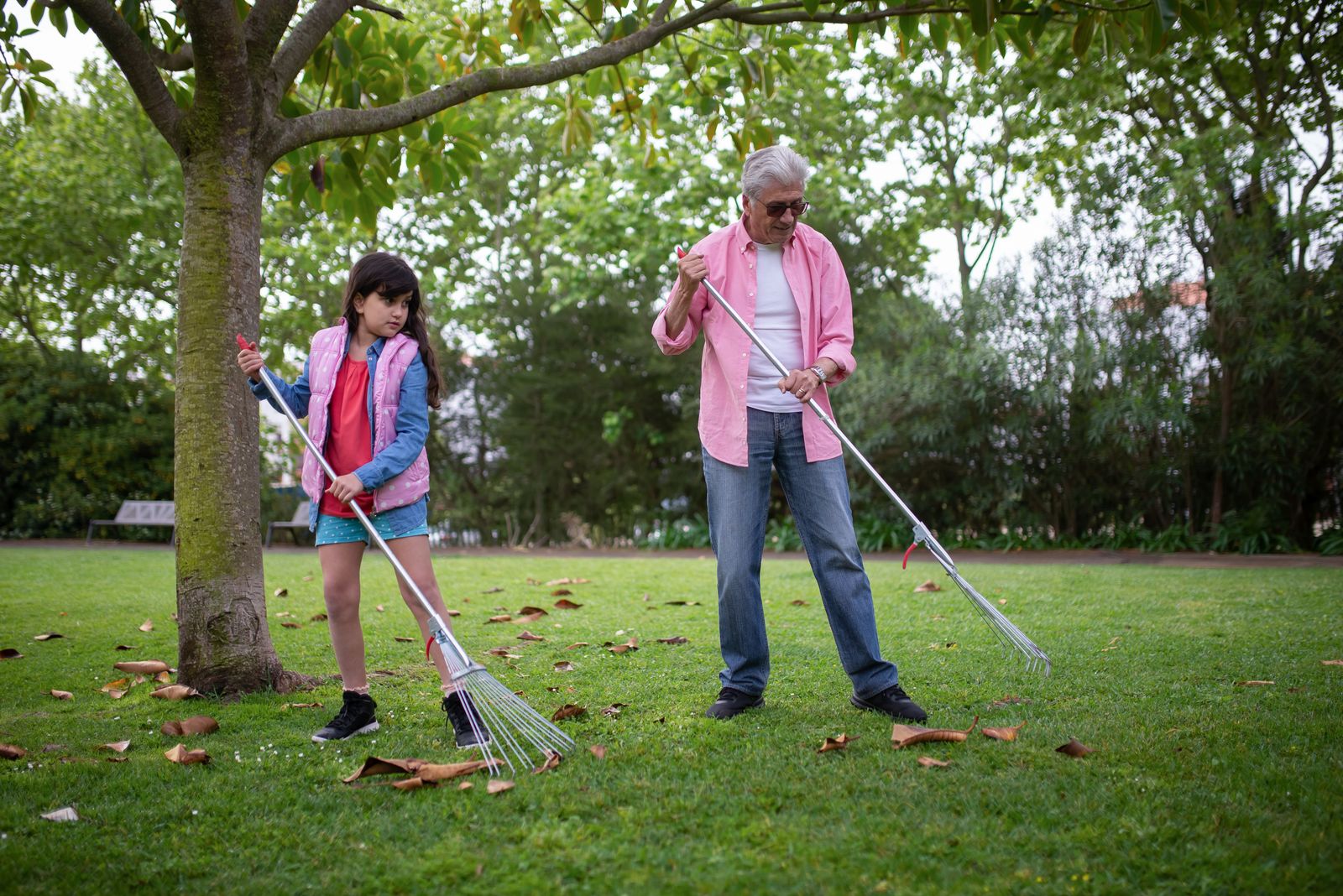
Rake It Easy: Why Fall Yard Work Leaves Your Back, Shoulders, and Knees Aching
The leaves are down, the garden has finished for the year, and there’s one more list of outdoor jobs standing between you and winter: raking, bagging, clearing the beds, cutting back perennials, and hauling the pots and patio furniture into storage. With the weather still mild, it’s tempting to knock it all out in a single weekend.
Then Monday arrives with a stiff low back, a sore shoulder, or knees that complain on the stairs. It’s one of the most common stories we hear at the clinic every October, and it’s rarely because of one dramatic moment. More often it’s a few hours of ordinary-looking work that the body wasn’t ready for.
Here’s why fall yard work is harder on your body than it looks, and what actually helps.
Why Yard Work Catches So Many People Off Guard
Raking looks gentle, but think about what you’re really doing: bending forward, reaching out, pulling back, and twisting through your trunk, over and over, usually favouring the same side. Add bagging wet leaves, kneeling at the garden beds, and lifting heavy pots, and you’ve asked your back, shoulders, hips, and knees to do hours of repetitive work in awkward positions.
It also tends to come after a break. Between the end of summer and the first big cleanup, most of us haven’t done this kind of sustained bending, reaching, and lifting in months. Cooler fall mornings don’t help either, since muscles and joints are stiffer when you start out cold. The result is the same pattern every year: lots of work, little warm-up, and a body that’s out of practice.
Where It Usually Shows Up
Yard work soreness tends to settle in a few familiar places:
Repeated bending and twisting, especially with a heavy bag of leaves or a full wheelbarrow, loads the low back far more than most people realize.
Raking, pruning overhead, and pulling at stubborn roots all lean heavily on the shoulders, and the pain can linger long after the job is done.
Kneeling at the flower beds, squatting to fill bags, and getting back up again are demanding on joints that may already be a little stiff.
For most people, a day or two of soreness after a big cleanup is normal. But if it keeps coming back every time you pick up a rake, or if pain in one of these areas hangs around well after the work is done, it’s worth paying attention. Pain that lingers is often a sign that something underneath, such as a stiff joint, a weak area, or an old injury, is being asked to do more than it can comfortably handle.
Three Things You Can Do This Week
You don’t need an assessment to make yard work easier on yourself. These are safe, practical steps for most people:
Spend five minutes walking around the yard, gently swinging your arms, and doing a few easy trunk turns before you pick up a tool. Cold muscles are far more likely to complain.
Work in shorter stretches of 20 to 30 minutes with a break in between, rather than one marathon session. Every so often, swap which hand leads on the rake so one side isn’t doing all the work.
Half-fill the leaf bags so they’re easy to carry, keep loads close to your body, and move your feet to turn rather than twisting your back.
Try these through the rest of the season. If your body feels better, great. If it doesn’t, or the same ache keeps coming back, let us know. That’s usually a sign it’s worth getting a proper look.
When to See a Physiotherapist
It’s worth booking an assessment if:
- Soreness from yard work lasts more than a few days or keeps returning
- Back, shoulder, or knee pain is making everyday tasks harder, like getting dressed, climbing stairs, or getting in and out of a chair
- You’ve started avoiding gardening or outdoor chores you used to enjoy
- You feel less steady or less confident on your feet while working outside
- Pain is interrupting your sleep
If getting to a clinic is difficult, home visit physiotherapy is available across Ottawa.
At ADM Ottawa Physiotherapy, our registered physiotherapists assess and treat yard work aches and pains at both our Bells Corners and Montreal Road locations. If this fall’s cleanup is already catching up with you, book an appointment and get back to enjoying your yard.
Bells Corners: (613) 820-8765 · Montreal Road: (613) 749-7461
Please note: The information in this article is intended for general educational purposes only and does not constitute medical advice. Every individual’s situation is different, and the suggestions above may not be appropriate for all injuries or health conditions. If you are experiencing back, shoulder, or knee pain related to yard work, please consult a registered physiotherapist or qualified healthcare provider before attempting any self-treatment. ADM Ottawa Physiotherapy accepts no liability for injury or adverse outcomes resulting from information applied without professional assessment.